Four methods to avoid failure of slewing ring
March 31, 2021
Installation requirements of excavator slewing bearing
April 13, 2021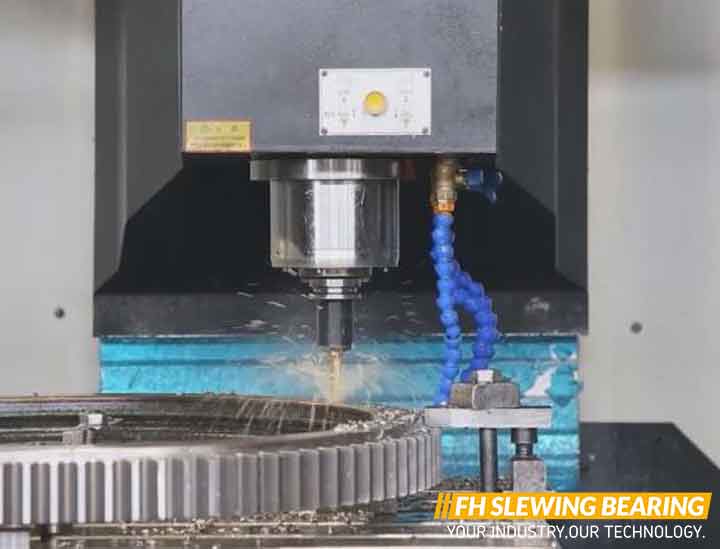
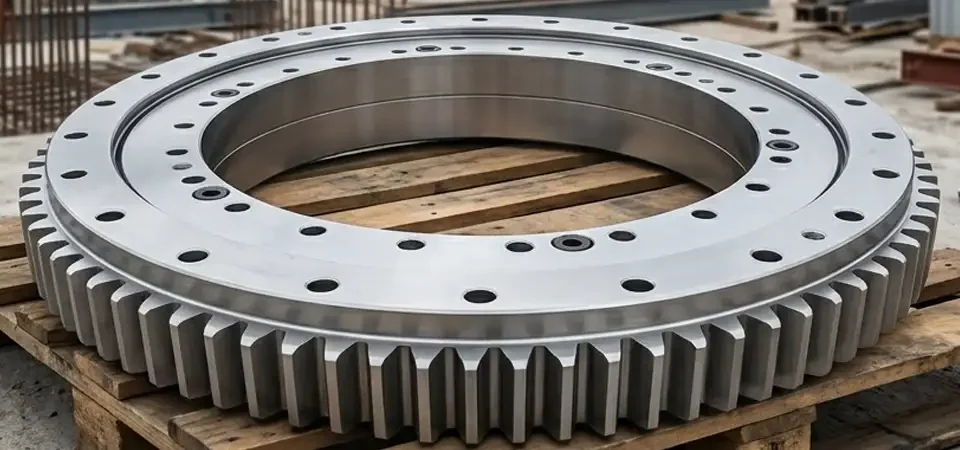
After proper maintenance and use, the life of the repaired slewing ring is equal to or greater than the life of the new slewing ring. The key is an effective preventive maintenance program that removes the slewing bearings from the equipment for repairs before severe wear and tear occurs. Most single-row four-point contact ball slewing bearings, multi-row ball slewing bearings, cylindrical roller slewing bearings, tapered roller slewing bearings, and thin cross-section slewing bearings with diameters from 8 “to 20” can be economically serviced and remanufactured. This approach can not only significantly reduce downtime, but also reduce replacement and inventory. In addition, remanufacturing provides products that meet or exceed new equipment standards.
Typically, slewing bearings are remanufactured within a two – to three-week delivery cycle at half the cost of a new replacement. In case of emergency, Xuzhou Fenghe Slewing Bearing may provide 24-hour maintenance service. If the slewing ring is deemed beyond repair by the technical engineer, a new replacement may be provided. The process begins with a thorough inspection of the slewing bearings. The specific repair and remanufacturing process is as follows:
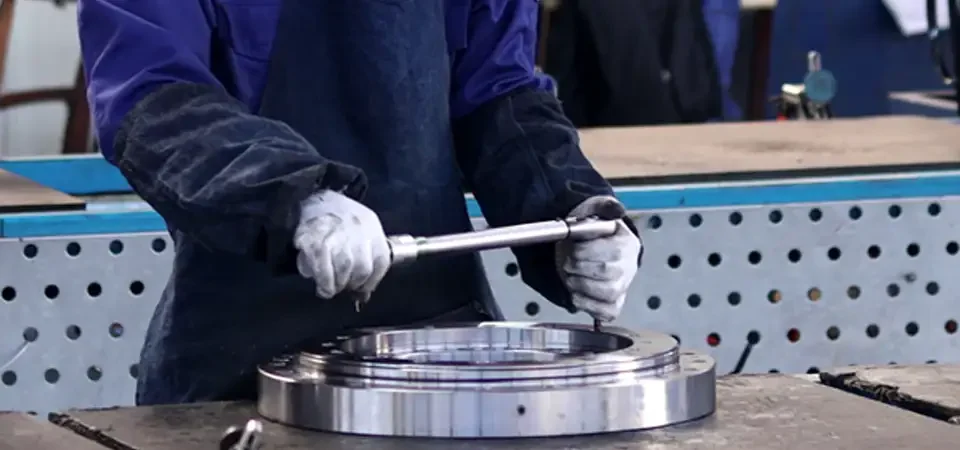
- The inspector first measures and records the critical dimensions. The slewing bearing is then removed and cleaned for nondestructive testing. Perform magnetic particle inspection to detect cracks or defects.
- The engineer carefully checks the test results to determine whether the slewing bearing meets the remanufacturing standards. For example, if excessive wear is evident, or defects or impurities are found in the raceway, slewing bearings are eliminated as candidates for the remanufacturing process. If the slewing bearings are found to meet the standards, an appropriate remanufacturing sequence is established. The specific operation depends on the results of the engineering analysis. In remanufacturing, the slewing bearings are finely ground to a higher standard than the new slewing bearings. The internal geometry of the slewing bearings is another important factor to consider. Operators take care to grind the raceway into the correct geometry to optimize load capacity. For example, most crane applications use four-point contact slewing bearings with a 60 degree contact Angle. In a tapered roller slewing ring, the extension of the contact line between the rollers and the raceway must all intersect at the common axis of the slewing ring.
- After regrinding, the slewing bearings are then reassembled with new seals, rolling elements and separators or cages. The new raceway components are slightly oversized to compensate for material removed during grinding. Therefore, the remanufactured slewing bearings have the same internal geometry as the original slewing bearings.
- After assembly, each slewing ring is lubricated, inspected and serialized for traceability.