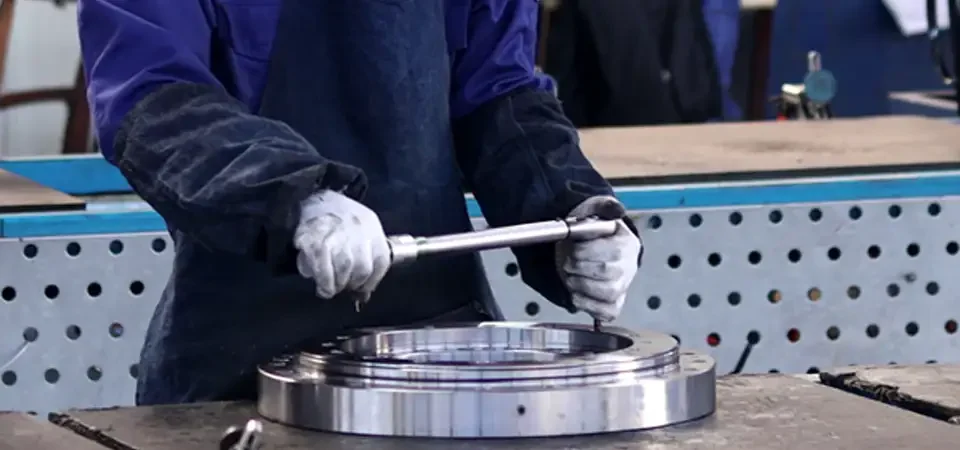
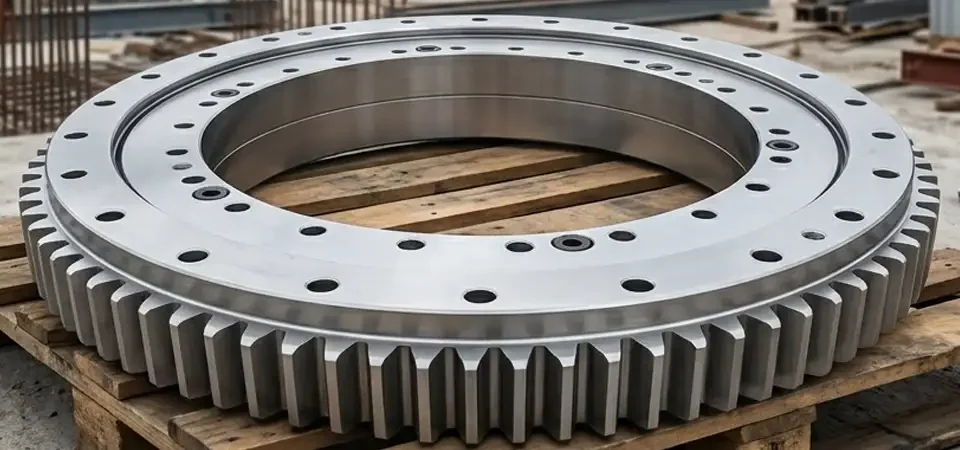
How to repair hydraulic excavator slewing bearing?
March 6, 2023How to choose the slewing ring pinion?
March 6, 2023
- space saving needs
Thin-section slewing rings deliver higher speeds, greater efficiency and precision with reduced friction and impressive design flexibility. They also reduce weight and bulk in applications due to the small size difference between the inner and outer rings, making them a suitable choice for robotics where footprint and weight are at a premium.
However, since they are so thin, you have to pay special attention to the roundness of the rings themselves. If you use a thin section slewing ring without lubricant and rotate the inner ring, a slight squeeze of the outer ring between your fingers and thumb will stop the slewing ring on its track due to the incredible flexibility of the device.
Therefore, the manufacturing process had to be extremely precise to ensure maximum roundness of the two rings, as well as a good noise level of the slewing ring itself. This often requires fine grinding and machining, along with a high level of quality both in workmanship and raw materials. If the loops are not formed perfectly, even small differences can prevent the slewing ring from running smoothly, resulting in excessive noise.
Available as shielded or sealed, these thin section ball slewing rings can accommodate radial loads and moderate thrust loads in both directions. Certain smaller thin section slewing ring sizes are available with glass fiber reinforced nylon high speed synthetic cages.
- Lubrication of light slewing bearings
You should choose a low torque, free spinning and low noise grease, too hard a grease will not give the best results as it may increase the slewing bearing torque to unacceptable levels for thin profile slewing bearings. The most suitable temperature range is -40 to 150°C grease. This allows for applications ranging from refrigeration to close to furnaces where robots are most likely to be used. Choosing a food-grade grease is also important if the robot is to be used in food or beverage production or packaging. Proper grease selection will result in free-running slewing rings, reducing power consumption of the machine itself as well as long-term maintenance costs. This is also one of the factors that can affect the overall speed of the robot arm.