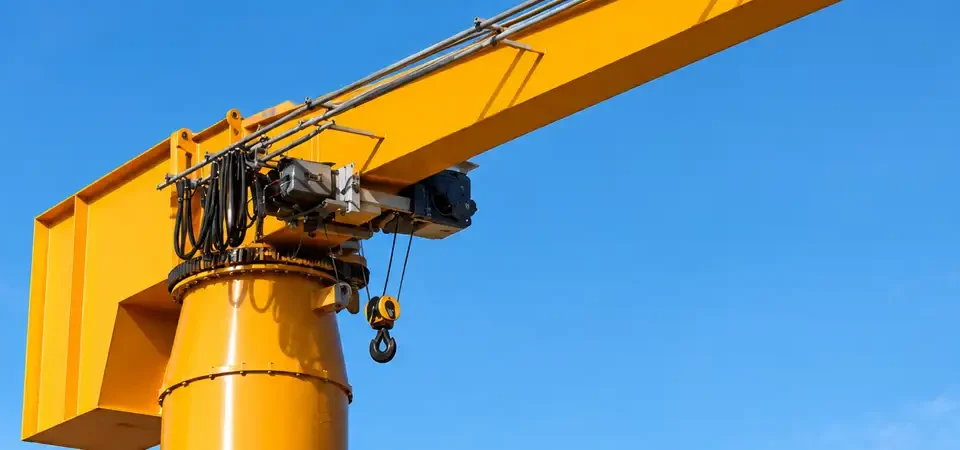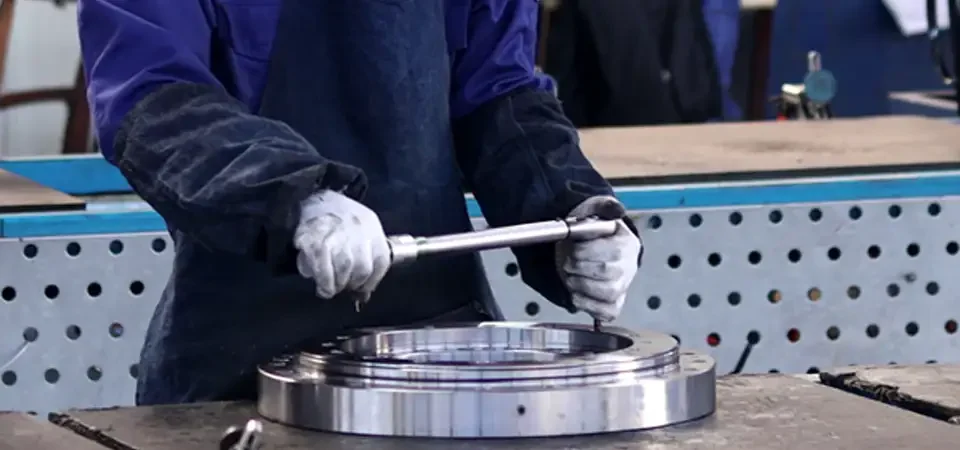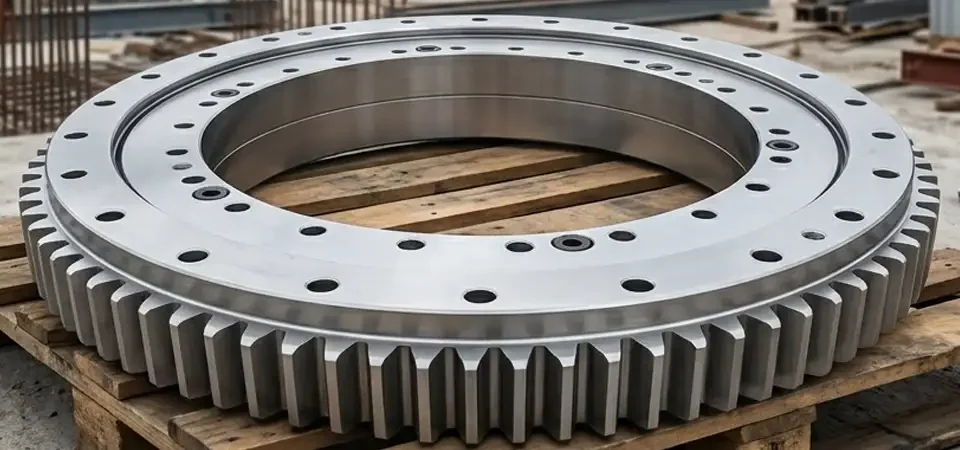
What is a flange slewing bearing?
April 7, 2024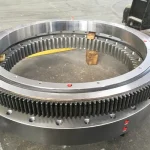
slewing bearing rocking test
April 29, 2024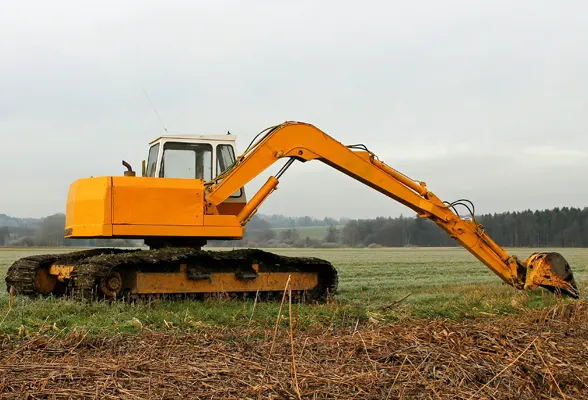
The excavator slewing bearing sealing ring plays a vital role in the operation of the excavator. Here are a few aspects of its importance:
- Prevent hydraulic oil leakage: The slewing bearing of the excavator carries the weight of the entire body and provides power through the hydraulic system. The function of the sealing ring is to ensure that the hydraulic oil circulates inside the support system and prevents leakage to the external environment. Leaking hydraulic oil will cause the pressure of the hydraulic system to drop, affecting the performance of the machine and even causing damage.
- Protect the support system: The slewing support system of the excavator includes many important parts, such as bearings, gears, etc. The existence of the sealing ring can prevent debris, moisture and other external substances from entering the support system, protect these key components from wear and corrosion, and extend their service life.
- Ensure safe operation: Leaking hydraulic fluid can create slippery surfaces around the excavator, increasing the risk of operator slips or machine instability. By keeping the hydraulic system tight, seals help ensure the safety and stability of the excavator while working.
- Reduced maintenance costs: The proper working of the sealing ring can reduce the maintenance costs of the excavator. No leakage of hydraulic oil means that there is no need to add hydraulic oil frequently, and it also reduces the loss of internal components of the hydraulic system caused by insufficient lubrication.
Therefore, the correct installation and maintenance of the excavator slewing ring seal is crucial to ensure the normal operation of the excavator, extend its service life, and ensure the safety of the operator.
If there is a problem with the sealing ring, it should be replaced in time. The following are simple replacement steps:
- Preparation:
Turn off the excavator’s engine and park it on stable ground.
Securely support the excavator to ensure it does not move unexpectedly.
Have the necessary tools and equipment ready, including wrenches, hydraulic jacks, lifting equipment, etc.
- Removing external parts:
Remove the parts that require sealing replacement, such as hydraulic cylinders, connecting rods, etc. Be careful during disassembly to ensure no other parts are damaged.
Mark and record where each part is and how it is connected so it will fit accurately during reassembly.
- Clean work area:
Clean the work area, including the excavator’s slewing bearing and the surrounding area. Make sure the surface is clean and free of dust, oil or other debris.
- Remove the old sealing ring:
Using an appropriate tool, such as a seal remover or a special tool, carefully remove the old seal from the support base.
Be careful not to damage the support base or other adjacent parts, and avoid using excessive force.
- Cleaning and inspection:
Carefully clean the surfaces of the support and adjacent components, wiping them thoroughly with detergent and a cloth.
Carefully inspect the support base and related components for damage, wear or other problems, and repair or replace them if necessary.
- Install new seal:
Apply appropriate lubricant to the new sealing ring to ensure that it can be installed smoothly on the support seat.
Using special tools or appropriate methods, carefully install the new sealing ring correctly into the groove of the support base, ensuring that it is completely sealed and in the correct position.
- Reassemble:
Reinstall the disassembled parts onto the excavator, making sure that each part is in the same position and connected as before.
Tighten bolts and nuts to the specified torque value using the correct torque to ensure the connection is secure but not too tight.
- Lubrication and testing:
After installing the sealing ring, properly lubricate the slewing bearing and hydraulic system.
Start the excavator’s engine and perform a functional test of the slewing bearing to ensure it runs smoothly without abnormal noise or leakage.
- Check and adjust:
Check whether the installed sealing ring is effective and make sure there are no leaks or abnormalities.
Make adjustments as necessary to ensure that all excavator functions are operating properly and seals are installed correctly.
Before performing any repair work, be sure to refer to the relevant technical manuals and repair guides, and seek professional technical support if necessary.