How does a slewing bearing work
March 2, 2020What is a crossed roller bearing
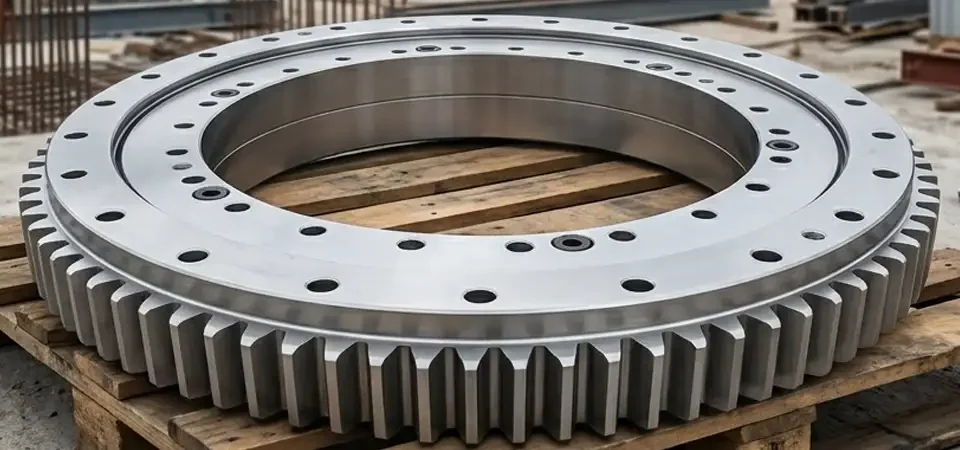
March 4, 2020- Slewing drive device is one new type slewing bearing product, usually is also called slewing bearing, commonly composed of worm, slewing bearing, housing, motor and other components. Because the core components use slewing bearing, at the same time can bear axial force, radial force, overturning force. Compares the slewing drive and traditional slewing type, This type of slewing drive has some advantage features, such as easy installation, quick maintain, and save the installation space to a great extent. This type product could be used widely in heavy flat transportation, container crane, cranes, aerial work vehicle, solar generation system and construction machinery and new energy fields.
- The structure of slewing drive
The slewing drive can be basically divided into single worm drive, double worm drive and specially slewing drive.
- Three advantages of the slewing drive
Modular
Due to the high integration of the slewing drive, caused our users do not need to purchase every rotary drives’ each components, this also reduced the preparation processes before producing, thereby greatly increased the labor productivity.
Safety
Worm gear and worm drive could be reverse self-locked, can realize reverse self-locking, that’s to say, the worm can only be driven by the worm gear, otherwise, could not be. This makes the slewing drive could widely be used in the lifting, aerial working device. While improving the technological content of the main engine, it also greatly improves the stability and safety factor of the engine. Compared with slewing drive and traditional slewing products, its easy installation, easy maintenance, save installation space at a certain extent.
Simplified main engineer design
Compared with traditional gear transmission, worm gear and worm transmission could get relatively reduction ratio. In some cases, it could omit the reducer parts, thus reducing our customers purchasing costs, and also greatly reduced the occurrence rate of mainframes.