Standard vs Custom Slewing Bearing: How to Decide
July 20, 2026
How to Calculate Slewing Bearing Load Capacity: A Step-by-Step Selection Guide
August 3, 2026
The Ultimate Lazy Susan Bearing Size Chart: How to Choose the Right Hardware
Starting a new rotating project? Whether you are building a custom dining table centerpiece, a corner kitchen cabinet, or a commercial display, selecting the correct hardware is crucial. To prevent tipping, wobbling, or hardware failure under load, you need accurate measurements.
That is why we have created this comprehensive lazy susan bearing size chart to help you make the right choice the first time.
Why Hardware Sizing Matters
Choosing the wrong bearing size is the most common reason rotating platforms fail. If the bearing is too small, the turntable will become unstable when weight is placed near the edges. If it is too large, the hardware becomes visible and the rotation may feel stiff because there isn’t enough leverage to overcome the bearing's friction.
By consulting a standard lazy susan bearing size chart, you ensure a smooth, silent, and stable rotation.
The Standard Lazy Susan Bearing Size Chart
Use this quick reference guide to match your bearing diameter to your intended turntable top.
| Bearing Size (OD) | Recommended Turntable Diameter | Average Load Capacity | Ideal Application |
| 3 inches | 6 - 12 inches | 150 lbs | Small spice racks, craft spinners |
| 4 inches | 12 - 18 inches | 300 lbs | Cabinet organizers, small monitors |
| 6 inches | 15 - 24 inches | 400 lbs | Serving trays, tabletop displays |
| 9 inches | 18 - 30 inches | 750 lbs | Standard dining table centerpieces |
| 12 inches | 24 - 40 inches | 1,000 lbs | Corner cabinets, retail displays |
| 14+ inches | 30 - 48+ inches | 1,500+ lbs | Large furniture, heavy commercial use |
Pro Tip: Always check the specific manufacturer's weight rating, as materials (aluminum vs. stamped steel) will affect the final capacity.
The "50% Rule" for Perfect Stability
If you don't have a chart handy, you can rely on the industry-standard 50% Rule.
Simply put, your bearing should be approximately half the diameter of the rotating surface it supports. For example, if you are building an 18-inch wooden tray, a 9-inch bearing is your best choice. This ratio provides the perfect balance between edge stability and rotational leverage.
Key Installation Tips:
Center it perfectly: Even a slight offset will cause an eccentric wobble.
Lubrication: Most stamped steel bearings come pre-lubricated, but adding a few drops of silicone oil can quiet down noisy ball bearings.
Mounting: Always secure the bottom plate to your base first, then attach the rotating top through the access hole.
Scaling Up: When You Need Industrial Strength
Standard hardware is excellent for furniture and light retail displays, but what happens when your project exceeds 2,000 lbs? For heavy machinery, robotics, industrial automation, or massive architectural turntables, stamped sheet-metal bearings will fail.
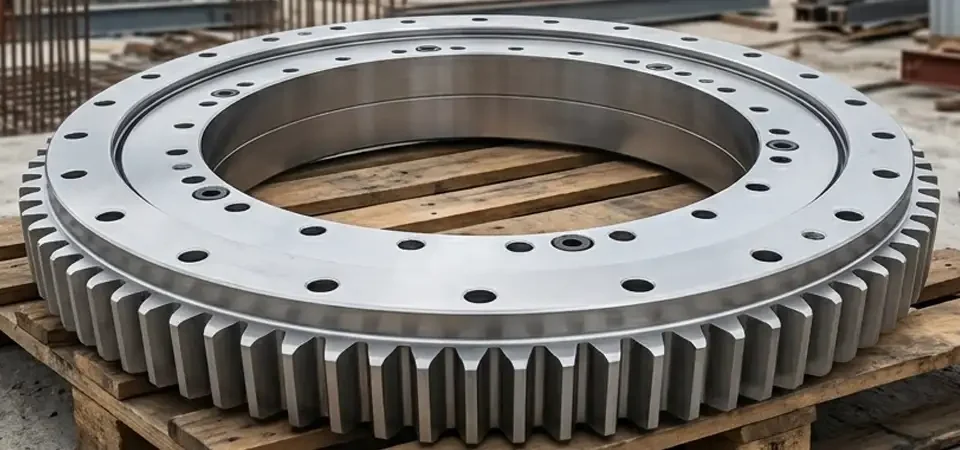
This is where you transition from a standard lazy susan to an industrial slewing bearing.
Unlike standard household hardware, industrial slewing bearings (like those manufactured under the FH brand) feature precision-machined raceways, integrated gear teeth, and the ability to handle severe axial, radial, and tilting moment loads simultaneously. If your project involves heavy construction equipment or precision automation, upgrading to a professional slewing ring or slewing drive is essential for safety and longevity.
Ready to upgrade your rotating mechanism? [Insert Internal Link to your FH Slewing Bearing Product Page] to explore heavy-duty solutions.