Fault analysis of slewing bearing
March 19, 2020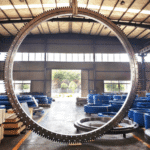
What are the types of slewing bearing
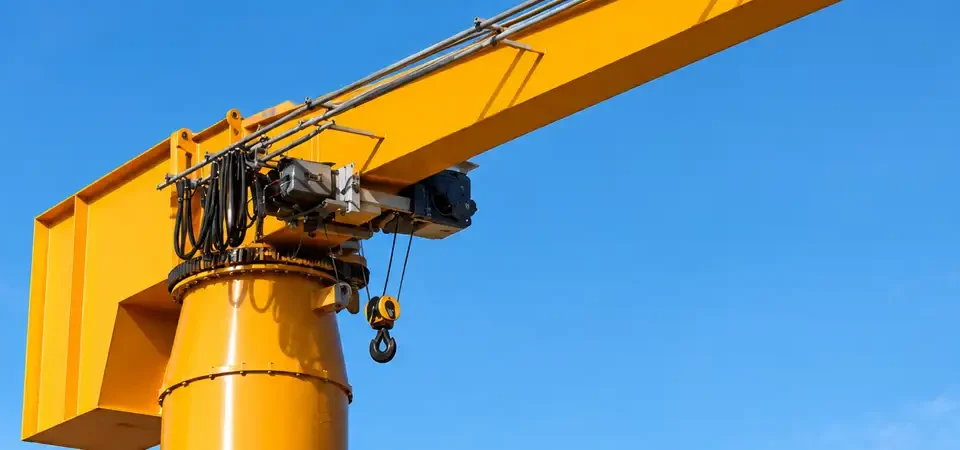
April 9, 2020Slewing bearing is an important force transmission component required by a cutting mechanism that two mechanical components rotate in a relative circle and bear axial force and overturning moment radial force. Its main role is to bear the transmission and transmission force, so that the two parts of the mechanical components relative to the circular rotation it is suitable for a variety of different mechanisms of different rotating working state, is the basic components of machinery, is widely used in a variety of construction machinery large rotary device
1 Performance characteristics and structural forms of slewing bearings
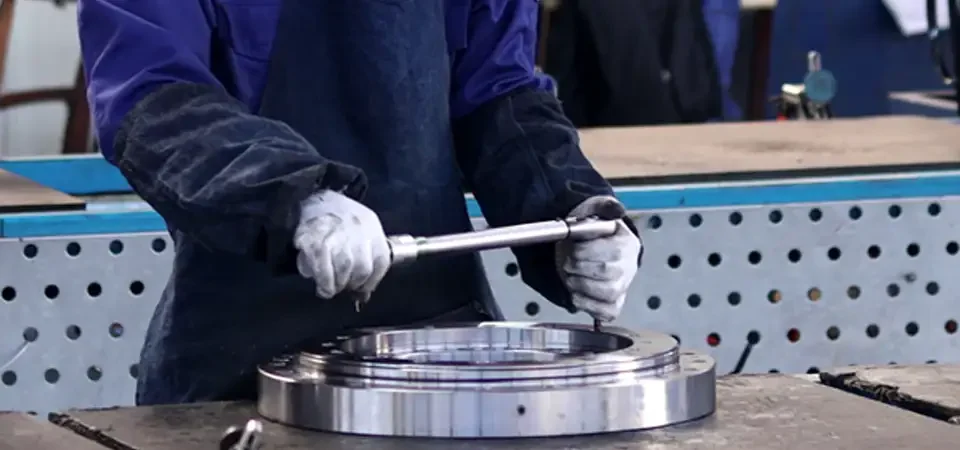
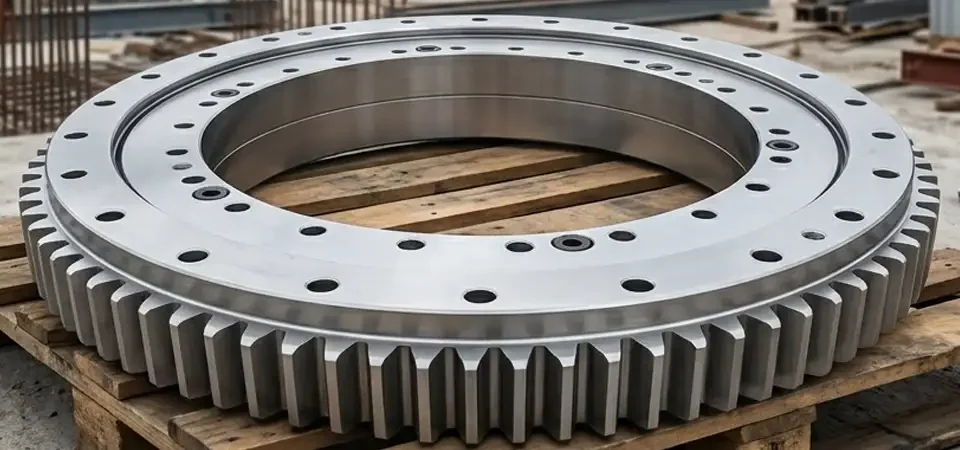
Generally, slewing bearings are mainly composed of inner ring, outer ring, rolling body, isolation block, sealing device and grease. The outer seat ring of slewing support is connected with the turntable by bolts, and the inner seat ring by bolts. The form of slewing bearing structure is: according to the structure of the rolling body is divided into ball, roller and ball joint; According to the rolling body row number structure is divided into single row, double shake D platoon type; According to the raceway structure is divided into curved surface (arc), plane and steel wire raceway according to the transmission form is divided into outer teeth, inner teeth and toothless.
- How to select the slewing bearings
It is divided into four series by structure:
- Single-row four-point contact ball type (01 series), light and compact structure, the steel ring and the circular rolling path four-point contact, can withstand the axial force, overturning moment and radial force at the same time
- Double rejection ball type (02 series), it is divided into upper and lower two rows to arrange the ball by the thousands of ball in the upper row is larger than the lower row ball, so the upper row ball load is large, the lower row ball load is small for the advantage of bearing a large overturning moment and axial load, the contact Angle is made into 90° to enable it to move freely
- Single row cross roller type (11 series), the rolling body is a cylindrical or conical shape with 90° cross arrangement, which is a plane raceway, generally a 45° contact Angle. The rollers of adjacent raceways are crossed arrangement on the axis, and the radial load, axial load and overturning moment can be transferred along the axis in different directions
- Three row roller type (13 series), and double row ball type slewing bearing is similar, the main transmission radial load is in the middle of a thousand – row roller, its vertical thousands of row and row of rollers a large load, straight filling of large rotary equipment – generally using three row roller type.
- Selection of slewing bearing
For the application, the most common type of slewing bearing four compare analysis, calculation, the raceway diameter and cross-sectional structure of similar size, cross roller type dynamic bearing capacity is higher, the static bearing capacity is higher, four-point contact ball type three row roller type comprehensive carrying capacity of the most high, the bearing capacity of the double type low contrast analysis of its technical economy, USES the following indicators:
- Technical performance index aG=MM/
- Economic index aE= S/M
Mark: M is the maximum overturning moment borne by the slewing bearing; W is the dead weight of the slewing bearing; S is the manufacturing price of slewing bearings.
Through the calculation and analysis of the aG value of nearly 500 kinds of slewing bearings of different specifications used in production, the conclusion is as follows: allowable load torque per unit dead weight, when the raceway diameter D is small, the cross roller structure is the worst, and the single-row four-point contact structure is better. When the raceway diameter D is large 1.7m, the three-row roller structure is the best